Showing posts with label book review. Show all posts

25 January 2010

Reading about Writing

I've been getting into reading again and it has felt really good.  I always forget how good it is lose yourself in a book--it really doesn't compare to a tv show or a movie or any other form of entertainment.  A book transports you and when you find yourself reaching for those pages, unable to put the book down, it fills you with a deep sense of satisfaction, a sigh of relief, like all is well in the world.

I was browsing the writing section of a local bookstore and found this book:


and this one:


two very different authors about the craft of writing.

I'm about 3/4s of the way through each of them, and I like both of them.  The Forest for the Trees is written by a literary agent and former senior editor for Doubleday and to be honest, when you first read it (and you're a writer), it makes you feel like you're mentally ill.  It's like a self-help book for writers from a publishing point of view, the view of an editor who has worked years with talented but self-destructive writers.  You can tell that Betsy cares deeply about books and wants writers to write them and she wants to bring them out of whatever barriers (mental, substance related, emotion) keeps them from producing work.  I really didn't relate to the descriptions of manic depressive writers (ok maybe just a wee bit) but when she went into skin disorders as a common trait of writers, I thought, HOLD UP!  Are you kidding me? I have had psoriasis since I was in elementary school and according to Betsy, psoriasis and eczema are right up there with substance abuse and bipolar disorder as major identifiers of writing personalities.

I felt a bit exposed and wide-eyed.  The book was so well written though that I wasn't thwarted and kept plunging ahead.  It's paid off.  I feel as if I've gotten a very practical lived sense of what the demands of a writing career are and Betsy gives nice insider tips on how publishers and editors see writers and what you can do to navigate the competitive publishing world.

Stephen King on the other hand is an easier read with fascinating stories from his life.  The things I liked the most about his book were his stories on struggling to become a writer.  He used to work in a laundromat after college and wash table linens from seafood restaurants that were crawling with maggots.  Ick.  I admire his resolve to write and his devotion to the craft.

29 December 2009

Holiday Reading: My Life in France


Books are some of the best gifts in my opinion, and I got three this Christmas.  It made gift time stupendously gratifying.  When I saw the crisp pages and book bindings, I squealed, jumped, and danced around.

My good friend L. generously gifted me with one of those books--a paperback volume of My Life in France by Julia Child.   I devoured it in 2 days.  Child and Prud'homme made me feel as if I was in France, not in my parents' home lounging around in my well-worn pjs.  Everytime I opened the book, I was transported to Paris, to that indescribable insane happy feeling of joie de vivre, living life with gutsy aplomb. 

I immediately wanted to read sentences or paragraphs off to whoever was sitting by.  Julia had such a fun, carefree approach to life--I found her immensely appealing, and the similarities between her and Paul and J. and I were encouraging.

I learned more about Julia and Paul and fell in love with their relationship.  They supported each other and you could tell that individually, they felt free to fully discover and pursue who they were truly meant to be.  Marriage didn't stifle or oppress them but provided the support and inspiration they needed.  They actually achieved the paradoxical yoking of individual journey and marital devotion.  With each page, I dove deeper and deeper into a love story that exuded warmth and hope.  Julia was an independent, confident, strong and passionate woman who could honestly say that she couldn't have become who she was without Paul.  Her story was so feminist...yet so domestic.  It defies categorization.  Their love story was a soothing balm to my sometimes cynical marital heart.

Julia lived in a different time and place--post World War II when American culture was a prized export and countries devastated by the war were only starting to think of becoming industrialized.  Child's France is a cheaper, more "primitive" France, viewed by Americans as dirty and not with the times.  Yet the expat communities are thriving, artists are getting by just fine, and jobs seem plentiful.  The dollar goes further and even though Julia says she became "extremely depressed" at their "meager government allowance," you can't help but think they are still living really really well.  Julia doesn't have to work, and Paul's salary still allows her to buy all the cooking gadgets she wants, trips into the country, and gourmet full course dining experiences every week.

Even so, Julia's accounts never left me feeling envious or regretful.  Julia was not one for wishful thinking or even sentimentality (she writes towards the end that her father's death made her relieved rather than sad and it would make trips to California easier), and I detected a consistent sense of gratitude, an acceptance of her limitations and the limitations of the world in which she lived, and an admirable resolve to always push ahead and truly live.

Another gift of the book was how it illustrated without a doubt the importance of place in the development and formation of a person.  Julia could never have been who she was without those years living and exploring in France.  In a smaller excerpt, Julia describes how three years living in Paris shaped her longtime editor, Judith Jones, as well.

Julia exudes an expat sensibility to the tee, a preference for living outside of America, and a recognition of how much place influences one's values and life choices.  Her words that Americans tend to choose comfort and business over deeper values struck a chord. Julia loved France because she felt free and could value people and a different way of life apart from the pursuit of monetary success and security.

In the last few years, after living in the inner city and scraping by on low rent apartments, I've come to value comfort over many other things which is one of the reasons why I'm living in a housing tract in Irvine surrounded by parking lots and not much else.  After reading the book, I made a commitment right there and then to live in a place that would influence and shape me in the ways that I wanted and needed--to be a more free person, engaged with my surroundings, experiencing new art and culture, and challenged to dig deeper and give from my true self.

Where is this place?  I'm not sure what's next.  I have some ideas.  One of them is France.

21 August 2009

The Alchemist by Paulo Coelho

On Tuesday, my friend Lydia visited me from her tenure at Yale Divinity School as a 3rd year MDiv student and presented me with two books for my birthday. One was on cupcake recipes and uber cute and the other was called The Alchemist by Paulo Coelho.

I'd never heard of The Alchemist but Lydia assured me that I would love it and that in fact, she was very intrigued to hear what my response would be like. Among her description of the book was that she had cried while she read it and that her brother (a prolific reader) had thought it was boring.

My interest was peaked.

On the cover of my book was a sticker that said it had been a bestseller for 20 years. And the image on the front depicted a dark castle on a hill with sand blowing around it.

Was this a tale of mystical intrigue and medieval secrets? A lingering romance?

According to Wikipedia and Paulo Cuelho's website, The Alchemist is Brazil's literary bestseller of all time. I started the book Wednesday afternoon and finished it in bed that night. Was it amazing? Yes. Will this book impact my life? Yes. Was it a literary masterpiece? Not in my opinion. Should it be considered a classic? Yes. So maybe it is a literary masterpiece? Well....

The language of the book did not blow me away. The storyline was solid and interesting but not a whole lot of frothing fun. I can see why Lydia cried and her brother was bored. BUT-- I have never read a book that described the process of following your dreams as well as this one.

The Alchemist is a work of fiction, a fable, set in the Arabian deserts, following one Spanish shepherd boy as he tries to follow his dream. What he learns along the way changes him and becomes a part of his Personal Legend. In the intro, Paulo outlines everything he learns by telling the reader the 4 obstacles you will face as you try and follow your dream. The story fleshes out the obstacles and helps you live that experience through your imagination. The intro becomes priceless condensed wisdom that you can take with you to inform your journey. And the story stays with you and reminds you of that wisdom.

I recommend picking up a copy and reading the inside cover summary, Paulo's introduction, and then his bio at the end of the book. Then you will see why this book is worth reading. Paulo is one of those present day mystics who had a dream that he was tortured for (by parents and paramilitary groups), which he then abandoned only to be led back by the intervention of visions and strangers telling him to go on a pilgrimage and nurture that dream. He is a Catholic, a spiritual person, and someone who seems to truly fulfill the role of wise elder in our society.

The Alchemist encouraged me to keep going and to be wise to the realities and sufferings and rewards of following my dream. I think it will do the same for you.

17 July 2009

Book Review: A Year in Van Nuys


Every week, I meet with my new friend Joleen for a cup of coffee (sometimes a sample cup of Trader Joe's coffee) to discuss the all important questions of life direction, job search status, and ideas. We've been meeting for about 2 months and I have to say, we've hit our stride.

Yesterday, she suggested that I write a book about my life living in the OC and she gave enough compelling reasons that I decided to give it some serious thought and read this other book I had seen in the bookstore for ideas: A Year in Van Nuys by Sandra Tsing Loh.

I've come to admire Sandra's writing recently for its wit and humor and ability to make me laugh a lot. J. checked out A Year in Van Nuys from the library for me and I finished it in two sittings. And here is what I have to say about this book (published in 2001).
  • It's really really really funny. I laughed a lot, especially in the beginning.
  • I was surprised at how much I related to her experiences. (Do L.A. freelance writers really have that much in common?)
  • She is so self-deprecating and revealing! How does she still have friends?
  • The ending does totally peter out and only worth skimming as many Amazon.com reviewers write.
  • It is a writer's writer kind of book. It's all about her writing life and how much it sucked that year.
  • It almost made me want to quit all this freelance business and study for the LSATs and be happy having stable income.
  • Most importantly, it was a case study on exactly what not to do if you want to be sane and happy and be a writer.

Here's what her painful stories reinforced:
  1. Get a life and get out or you will end up stuck in your bedroom for 3 years with writer's block and loathing self-pity.
  2. Read the Ennegram, Type 4. Learn how to deal with envy or it will destroy you.
  3. Have a regular practice of taking yourself lightly, forgiving yourself, and working on loving others.
  4. Have a regular practice of centering, whether that be prayer, photography, or something else.
  5. Do anything constructive to regularly get out of your head and your own thoughts.
  6. Be a contemplative.
  7. Be kind and serve others.
  8. Live fully in the moment.
  9. Do Welcoming Prayer a lot.
  10. And the list could keep going on.
I wouldn't use her book as a model for a book on living in the OC but overall, a quick enjoyable read. Some parts--her agony, her self-loathing, her moans--were a bit too negative and not funny enough to bear but all the other stuff, the parts when she really is spot on, hilarious, and you actually realize this is all useful info to help you avoid the same mistakes--well, that's nice.

For the complete opposite of Sandra Tsing Loh, check out The Happiness Project. This woman has a law degree and is writing a book about being happy.

31 May 2009

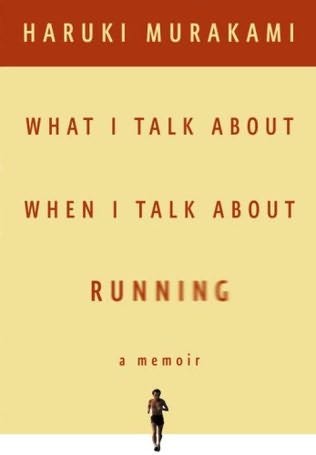
What I Talk About When I Talk About Running by Haruki Murakami


I have a friend who blogs about her practice of living inspired. I admire her constant search for inspiration and how she continues to find inspiration in unexpected places, filling her life with wonder and new possibilities.

Last week, an email exchange with her reminded me of her valued search for inspiration and I began to think about what inspires me. If you're not used to thinking in those terms, it's a little hard to get there. It takes some warming up and I drew a blank.

Spivak inspired me last week although it's still a swirling mass of challenging and intriguing ideas around my head. Did baking an amazing zucchini orange marmalade bread from the Tartine cookbook count as inspiration? Maybe.

But today, I finally finished What I Talk About When I Talk About Running (Vintage International) by Haruki Murakami and when I had read the last page and closed the book with satisfaction, I said emphatically, "Aha! This book inspires me!"

It's interesting, you know. From reading the book, I didn't feel like I should pick up running or even write a book. Murakami wrote this book as a memoir of sorts, a quest to find out for himself what his personal standard has been as a runner and writer. He chronicles how he first started writing, first started running, and how those two shaped each other and his life's perspective.

Towards the end of the book, Murakami writes about becoming a better swimmer for triathlon competitions. He finds a coach who strips his form down and teaches him one thing at a time. At first, it is "awful and awkward" and he can't understand how learning to swim (for ex.) flat as a board without rotation is going to help him. Next, his coach introduces rotating his left shoulder only and makes him swim up and down the pool doing only that. And so on ad tedium until one day, everything clicks. Every part of his body is moving as it should. His old habits have been broken, his old form is no more, a new form has emerged, a synchronization of all the new parts. Revelation!

Murakami's experience reminded me of learning to play the piano. I started piano lessons when I was four years old and ended in college. For a time in my youth, my parents were convinced that I was going to become a concert pianist and I would practice for 2-3 hours and could only leave the bench to go to the bathroom. Since then, my fingers have become stiff and I am nowhere near the kind of fluid alacrity I had on the keys. But I remember the drills and the experience of revelation. I remember the scales, the arpeggios, my worn out Czerny book. I remember how good it felt when I conquered a scale and my fingers flew over something that had troubled me a few weeks before. I remember how my teacher and I would break down a piece and how I would practice each trill, each measure over and over again until it was flawless and everything came together. I had no false illusions about becoming a world class pianist overnight. I knew it would take hours of practice, dedication, and years of devotion.

Similarly, I feel the same way about printing and book arts. I have no illusions of becoming a letterpress printer over night. Slowly but surely through my classes, I have gained a vocabulary and dexterity with my movements that have helped me become more and more proficient at designing, setting type, and printing correctly.

Why is it then that I never applied this to the art of writing? Maybe it's because it's so foreign (unprofitable, impractical?) and language around it so pretentious and lofty. How many times have I read or heard, "writing cannot be taught"? The idea is that talent for writing is innate and either you have it or you don't. Everyday, I sit in front of my laptop or notebook (or worse, think about sitting in front of my laptop or notebook) and wonder about how to do what I want so much to do i.e. write the damn novel. The writer's life feels shrouded in mystery and fantasy, an inacessible dream. Or in other word(s), bullshit.

Murakami's memoir shows me that writing, like any other craft and skill, is about the process of doing things over and over again, mastering each small thing, taking each step towards the finish line, getting a coach, doing whatever it is to keep on the journey of living the way your heart takes you and learning to do it with the pain of Reality. And when you finish something, you get up and do it again or find something new to challenge yourself, to keep learning about yourself, to keep being healthy. The learning and growing never ends.

After reading the book, I didn't feel like I should pick up running or even write a book. I felt and thought these things:
1. I need to do writing drills like I used to do piano drills.
2. I need training: a good coach, exercises, a space and structure for practice.
3. When I sit down to write, I cannot sit down to write a book. I sit down to write a word, a sentence, and to grow and learn.

Inspiring.

Thanks mom and dad for all those years of piano lessons. And thanks Liz for the inspiration to live inspired.